
FUP mobile hybrid power node
Three-phase power for defence, emergency response and resilient infrastructure.
FUP combines battery storage with other power sources in a mobile, modular system for locations with an unstable or unavailable grid.
Three-phase power · up to 12 kW output · up to 40 kWh storage · UPS transfer time < 10 ms
Specifications vary by configuration.
Best for off-grid operation, backup power during outages and rapid field deployment.
Developed for Institute of Security Studies (I-B-S), a Czech institute for security studies.
“A mobile hybrid power system with battery backup for demanding environments. when the power fails, it takes over the connected backup circuits.“
When conventional power sources are not enough
Mobile three-phase power between a portable station and a large generator.

Conventional portable stations
Often limited to single-phase output, with restricted capacity for sustained operation of demanding equipment.
Traditional generators
Noise, fuel dependency and demands on transport, maintenance and resupply.

FUP Systems
Three-phase hybrid power, quiet battery operation and a mobile design for rapid deployment.
Power is an operational capability.
Without stable power, operations are at risk:
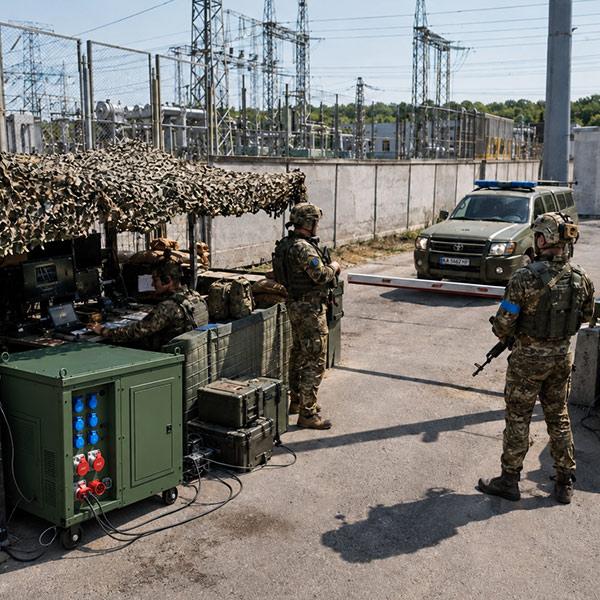
> C2 & Comms: Starlink, radios, servers
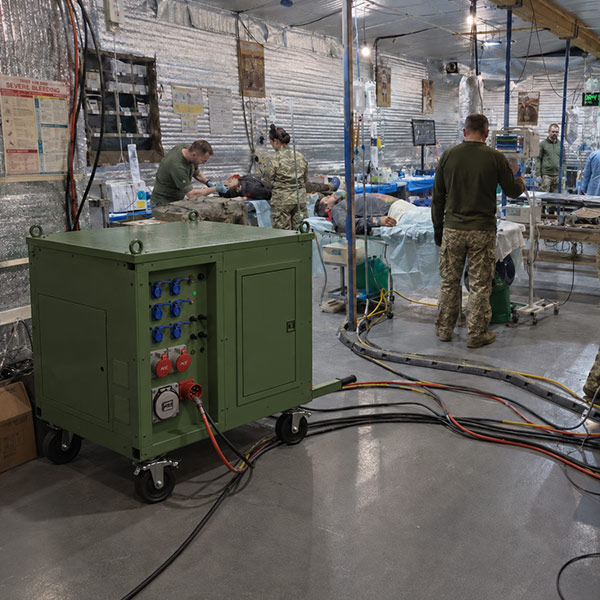
> Medical & MASH: Medical equipment, blood and medicine refrigeration, and lighting.
> UAV Operations: Charging, control stations and maintenance
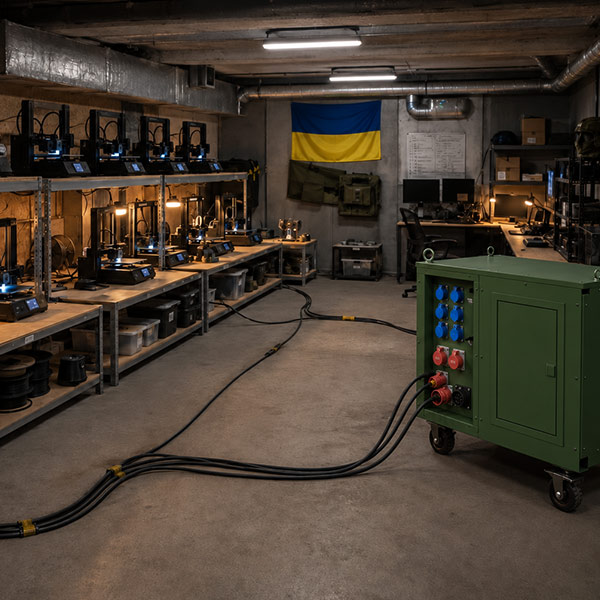
> Field technical support: Workshops, 3D printing and repairs
Relying solely on generators means noise, heat, fuel dependency and logistical demands.
ONE NODE. FOUR SOURCES. Quiet battery operation.
> A mobile three-phase hybrid power node with integrated distribution for field operations and emergencies. Clearly arranged outputs reduce the need for improvised connections.
> Practical engineering: A rugged mobile unit built with commercially available COTS components in a robust steel chassis.
COTS stands for Commercial Off-The-Shelf.
The generator provides power.
FUP adds intelligent control
adds intelligent control.
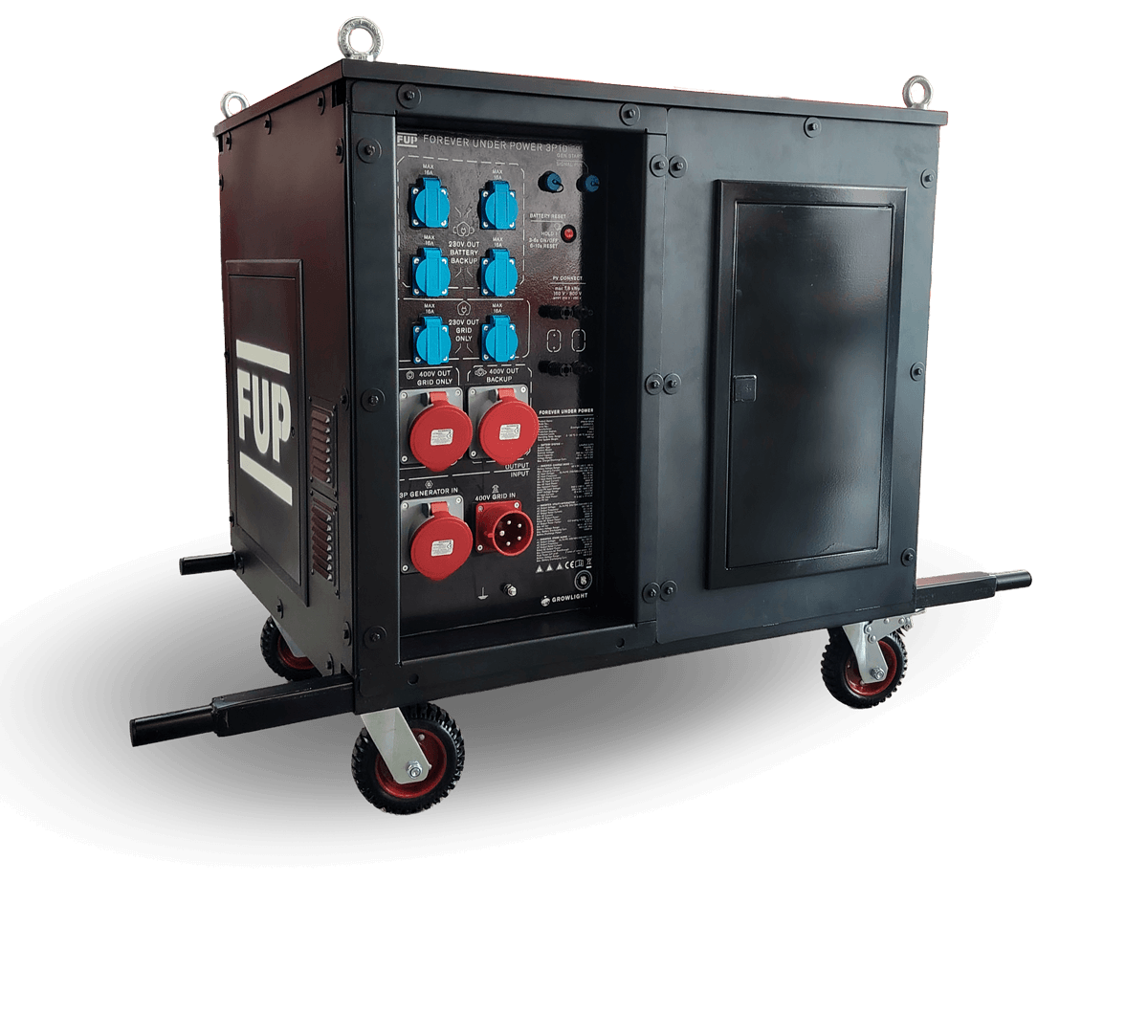
“If it breaks in the field, it must be possible to repair it in the field.”
HYBRID ARCHITECTURE
Four sources. Two types of output.
 Grid supply
 Battery storage
 Generator
 Solar modules
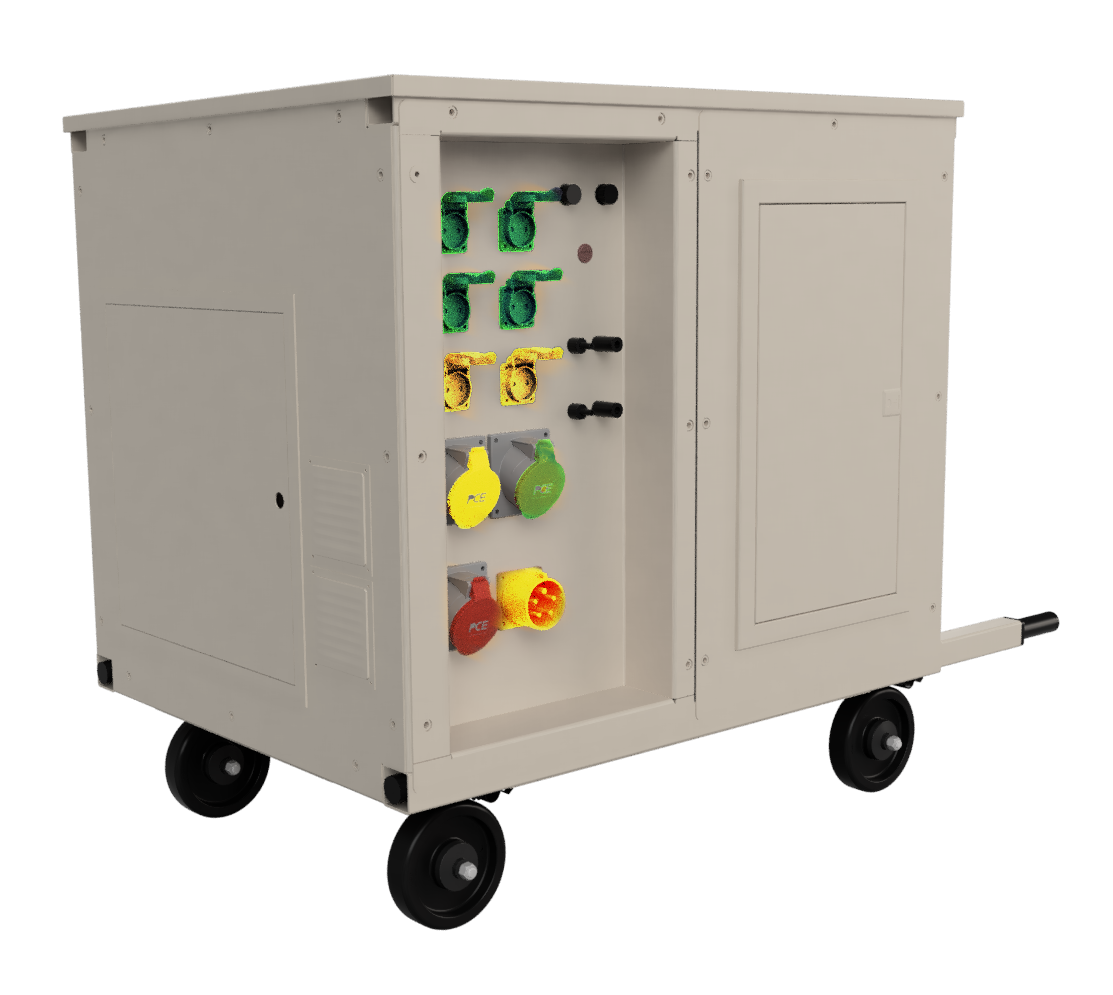
 Battery-backed output
 Grid-only output
> Easy connection: 16 A or 32 A sockets make it easy to connect compatible equipment. The wheeled design allows the unit to be moved into position.
> Expandable storage: Add battery modules for longer runtime, depending on the selected configuration.
The battery bridges power interruptions. With a compatible connection and configuration, the generator starts as needed, reducing fuel consumption and noise.
key specs
The numbers that matter.
Output: 6 / 8 / 10 / 12 kW · 2× peak for 10s
Storage: 10 / 15 kWh LiFePO4 · +25 kWh extension
Solar Input: From 2 kWp up to 15,6 kWp
Inputs: Grid · Generator · Solar · Battery
Outlets: 3× 400V + 6× 230V (4 backed up)
Form Factor: 95 x 100 x 75 cm width – fits standard doors
Weight: 280 kg (6kW/10kWh) — lifts with 4 people
UPS Transfer: < 10 ms
Oper. Temp: -20 – +50 °C (Sheltered deployment in winter)
Lifespan: 5–20 years
Ruggedness: Built to be dropped, rolled, and abused.
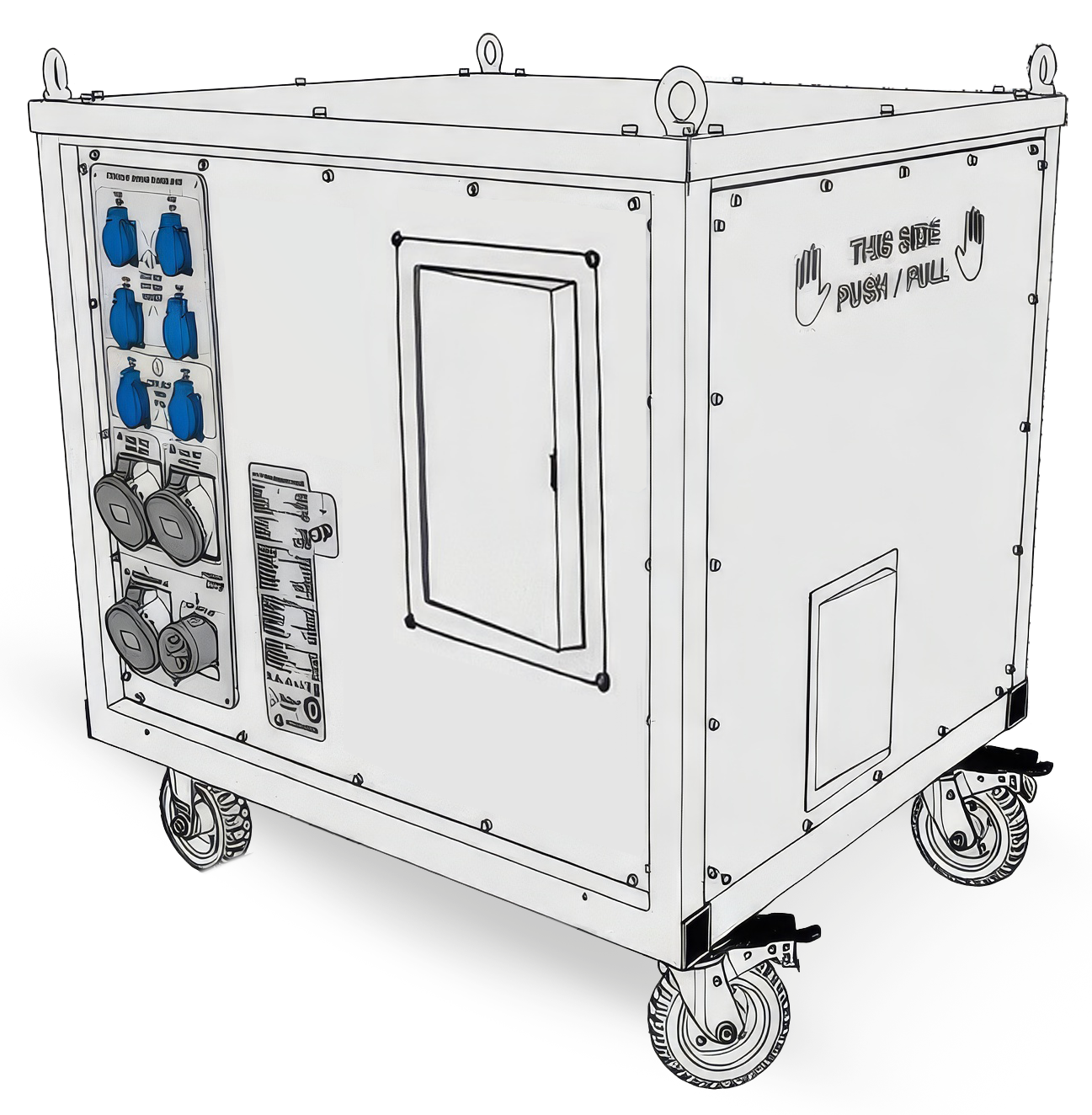
Stealth Operation: Zero emissions, zero noise, and strictly offline (No Wi-Fi/RF signals) for maximum security.
More capability in the field
5 operational advantages
THE LOGISTICS MATH
What can FUP change in your logistics?






IR Advantage
Reduced thermal and acoustic signature
Reducing combustion engine runtime can lower the associated noise and heat emissions. The actual benefit depends on the configuration and deployment conditions.
Use cases
Where power is essential to completing the task
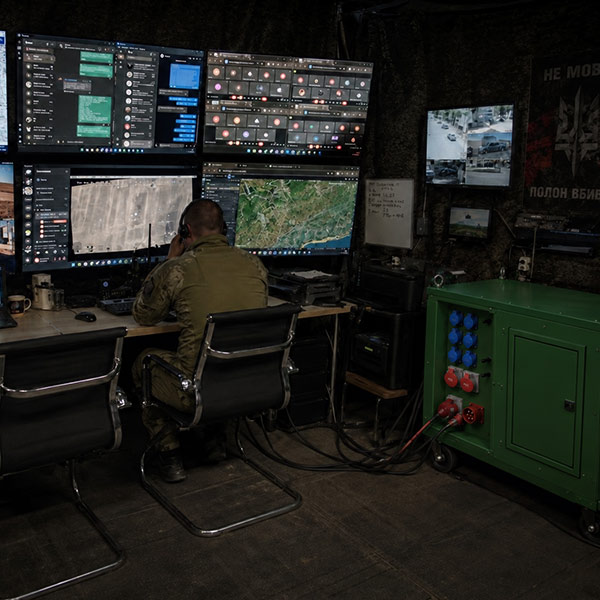
Rapid deployment
From transport to operation in a few steps. No tools required.
Talk to us. →
Request a technical briefing
Developed in the Czech Republic for Institut Bezpečnostních Studií, z. ú. © 2026 I-B-S
© 2026 FUP / Forever under Power